Healing From a Toxic Relationship
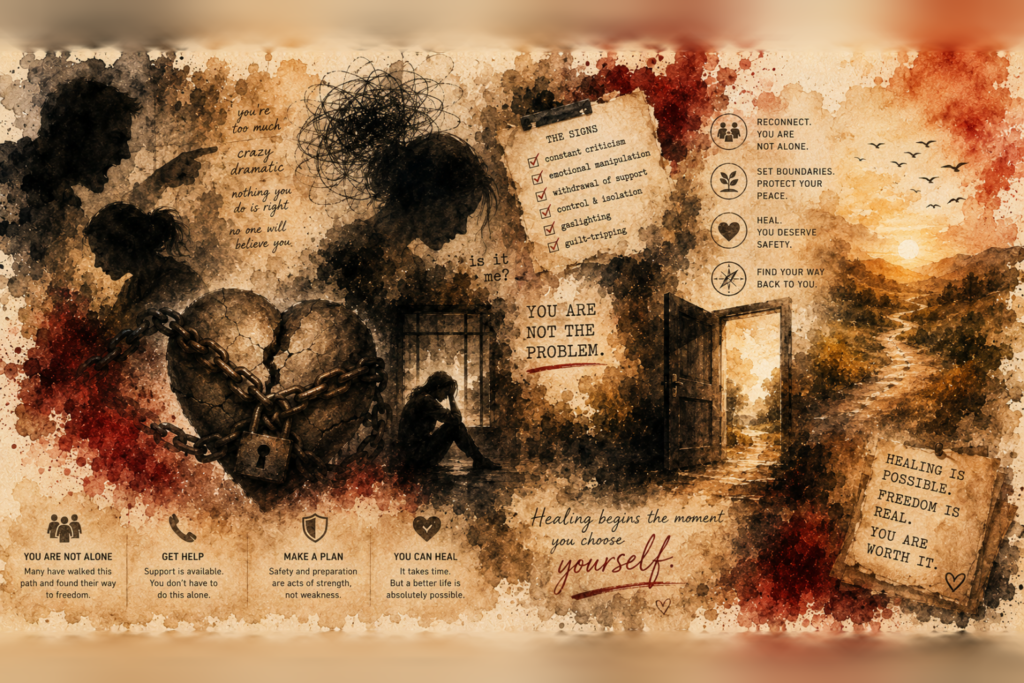
A toxic relationship rarely announces itself. It arrives slowly, one concession at a time, until the version of you that would’ve walked away on the first day has been talked out of existing. That’s not a sign of weakness. It’s how these relationships are built, and understanding how they’re built is the first real step toward getting out of one and staying out.
This is a plain look at what a toxic relationship does to a person, why it’s so hard to leave even when you know you should, and what actually helps. No pep talk. Just the mechanics, because the mechanics are what set people free.
What a toxic relationship actually costs
The damage isn’t only emotional, and it isn’t imagined. The research on this is large and consistent, and it points in one direction.
Psychological abuse is the most common form of harm in unhealthy relationships, more common than physical abuse, and it’s often the most damaging to mental health over time. In the United States, 30.2% of women and 22.3% of men report experiencing psychological aggression from an intimate partner at some point in their lives. That is 38.6 million women and 27.3 million men, which means if this is happening to you, you are not an unusual case. You’re part of a very large and mostly silent group.
The mental health toll is measurable. Across eighteen studies of women in abusive relationships, close to half met the criteria for depression, and the same body of work ties partner violence to raised rates of anxiety, PTSD, and suicidal thinking. And when researchers compare the different forms of abuse, emotional abuse often does more psychological harm than physical abuse, not less. Levels of depression, anxiety, and stress tend to be higher in people who experienced emotional abuse than in those who experienced physical or sexual abuse alone. The wounds that leave no bruise are frequently the ones that take the longest to heal.
There’s a reason for this that has nothing to do with how strong or smart you are. Chronic emotional abuse changes the way the brain responds to threat. It keeps the nervous system in a state of alert that was meant for short emergencies, not for years of daily life, and that prolonged state is what produces the exhaustion, the difficulty concentrating, the sense of walking on a floor that could give way at any moment. The body’s doing exactly what it was designed to do under threat. The problem is that the threat never leaves.
Recognizing the signs
Most people in a toxic relationship spend a long time unsure whether what they’re experiencing counts. That uncertainty isn’t an accident. It’s one of the effects of the abuse itself. So it helps to name the patterns plainly. The common signs include:
- Constant criticism. Not the occasional disagreement every couple has, but a steady undertone that you’re not enough, delivered often enough that you start to believe it.
- Emotional manipulation. Guilt-tripping, gaslighting, and emotional blackmail. The hallmark is that you keep ending up apologizing for things you didn’t do, or doubting memories you know are true.
- Withdrawal of support. A healthy partner is glad when you succeed. A toxic one competes with your wins, minimizes them, or resents them.
- Control and isolation. Monitoring where you go, who you see, what you spend, and slowly thinning out your contact with the friends and family who might tell you the truth about what’s happening.
Isolation deserves special attention, because it’s the most strategically important of these. A person cut off from outside perspective loses the mirror that would otherwise show them what’s going on. The fewer people you talk to, the more the toxic partner’s version of reality becomes the only version you hear. If you notice nothing else on this list, notice whether your world’s been getting smaller.
Why it’s so hard to leave
This is the part outsiders never understand, and it’s the part that keeps people trapped the longest. If the relationship’s so damaging, why not simply go?
Because a toxic bond isn’t held together by the good times or the bad times. It’s held together by the unpredictable mix of the two. When cruelty and kindness come from the same person on no schedule you can predict, the bond that forms is actually stronger than the bond formed by steady kindness, not weaker. The mind keeps working for the return of the good version, and a mind that’s always working never gets to rest and never gets to leave. Psychologists call this a trauma bond, and it’s a documented mechanism, not a character flaw. If you’ve ever wondered why you can’t stop loving someone who hurts you, that’s the answer, and it’s happening to your nervous system, not because of some failure in your judgment.
Several other forces stack on top of it:
- Eroded self-esteem. After enough time being told you’re the problem, leaving feels less like an option and more like something you’re not qualified to attempt.
- Financial and practical entanglement. Shared money, shared housing, shared children. These are real barriers, not excuses, and planning around them takes time.
- The pull of memory. You don’t fall in love with who someone becomes. You fall in love with who they were at the start, and part of you keeps waiting for that person to come back.
- Fear of the reaction. Many people correctly sense that leaving will provoke the worst version of their partner, and that fear is often well founded.
Naming these forces doesn’t dissolve them. But it does something important. It moves the difficulty out of “there’s something wrong with me” and into “this is a known trap with known parts,” and a trap you can see the shape of is one you can start to plan your way out of.
What actually helps
Recovery isn’t a single dramatic exit. It’s a series of ordinary, deliberate steps, and the order matters more than the drama.
Rebuild outside contact first. Before anything else, reconnect with the people the relationship pushed to the edges. This isn’t only for emotional support, though it’s that. It’s because you need outside perspective to recalibrate what normal looks like, and you can’t do that alone inside the situation. One steady, caring relationship with someone outside the toxic one can be the single most protective thing in your life during this period.
Get professional help if you can reach it. A therapist who understands abuse and trauma isn’t a luxury here. They can help you see the patterns clearly, manage the anxiety and depression that so often come with leaving, and hold the line when the pull to go back gets strong, which it will. If cost’s a barrier, look for sliding-scale clinics, community mental health services, and abuse-focused hotlines that can point you to local resources.
Set boundaries and expect them to be tested. A boundary isn’t a request for permission. It’s a statement of what you will and won’t accept, followed by action when it’s crossed. The response to a real boundary is usually escalation, because the whole system ran on your boundaries being negotiable. Expect that, and don’t read it as a sign you did something wrong.
Plan the practical exit carefully. If you’re going to leave, the logistics deserve real attention: a safe place to stay, access to your own money, important documents, and if there’s any history of physical danger, a safety plan made with people who know how to make them. Leaving is statistically the most dangerous moment in an abusive relationship, so this isn’t the step to improvise.
Can a toxic relationship be repaired?
Sometimes, but the conditions are narrow, and being straight about them matters more than hope. Repair requires that the harmful patterns be acknowledged by the person causing them, not just tolerated by the person absorbing them. It requires genuine, sustained behavior change rather than the temporary improvement that often follows a threat to leave. And it usually requires skilled professional help.
The distinction to watch is between someone who’s sorry they got caught and someone who’s doing the ongoing work of changing. The first produces a good week. The second produces a different relationship over months and years. If the pattern always returns once the pressure’s off, you’ve got your answer, and you’re allowed to stop waiting for a different one.
Moving forward
Getting out isn’t the end of the story. The nervous system doesn’t reset the moment you close the door, and the first stretch of freedom can feel strangely worse before it feels better, because there’s finally room to feel everything you had to suppress to survive. That’s not a sign you made the wrong choice. It’s the sign of a system finally allowed to stand down.
The work of the after is quieter than the work of the leaving. It’s rebuilding a sense of your own judgment after years of being told it couldn’t be trusted. It’s relearning that steadiness in a relationship isn’t boredom but safety. It’s rediscovering the interests and the people that got crowded out. None of it happens on a schedule, and comparing your pace to anyone else’s is a waste of the energy you need for the walk.
If you are stuck on why it was so good at the start, that is Why Were They So Good at First?. And what the strain of it does to a body is in Positive Mindset and Heart Health.
If you’re still inside one of these relationships and none of this feels possible yet, that’s understandable, and it doesn’t mean you’re stuck forever. It means you’re where almost everyone starts. The patterns described here are known, the exits are real, and the people who’ve walked out of far worse were, at one point, exactly where you are now, certain it couldn’t be done.
I write about this from the inside, as someone who lived it and has spent years studying how it works. This comes from personal and studied experience, and isn’t a substitute for professional care.
If you’re in immediate danger or need to talk to someone who understands, the National Domestic Violence Hotline is available 24/7 at 1-800-799-7233, or by texting START to 88788.